


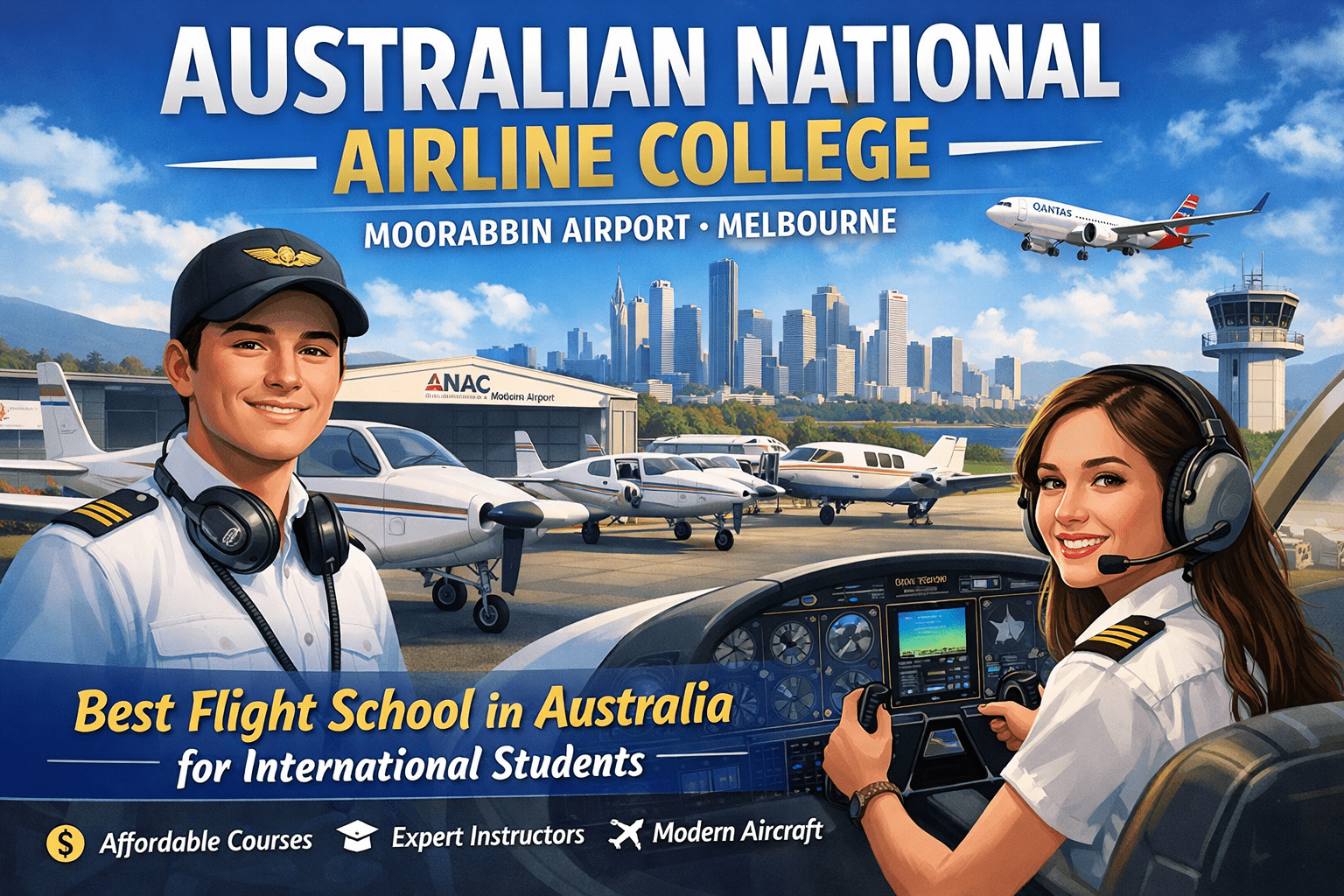
If you are an international student dreaming of becoming a professional pilot, choosing the right flying school in Australia is one of the most important decisions of your life. This decision does not only affect how you learn to fly—it directly impacts your total cost, visa safety, licence conversion, and long-term airline career prospects.
Australia is globally recognised for high-quality aviation training, but not every flying school offers the same balance of affordability, structure, aircraft availability, and career relevance. After careful research and comparison, Australian National Airline College (ANAC) stands out as one of the best and most cost-efficient flying schools in Australia for international students.
This article is written as a pure informational vlog-style script—natural, explanatory, and honest. There is no marketing language here. Everything is explained clearly so that students and parents can understand the real picture before investing.
Why Australia Is One of the Best Countries for Pilot Training
Australia has earned its reputation in aviation training through decades of strict regulation, safety culture, and international credibility. Pilot licences issued under CASA are respected worldwide and are generally easier to convert compared to licences from many other regions.
Another major advantage is Australia’s airspace environment. Student pilots train in both controlled and uncontrolled airspace, interact daily with professional air traffic controllers, and operate in real-world traffic scenarios. This produces pilots who are operationally confident rather than just technically qualified.
Training is conducted fully in English, which naturally builds ICAO-standard aviation communication skills—something airlines carefully assess during recruitment.
However, none of these national advantages matter if the flying school itself lacks structure or efficiency. This is where the choice of school becomes critical.
Introducing Australian National Airline College (ANAC)

ANAC is a long-established professional flight training organisation based at Moorabbin Airport, located in Melbourne. Moorabbin is one of the busiest general aviation airports in the Southern Hemisphere, making it an ideal environment for serious pilot training.
Unlike many small flying schools that focus mainly on hour-building, ANAC follows an airline-oriented training philosophy. From early stages, students are introduced to standard operating procedures, disciplined cockpit management, and professional radio communication.
For international students, this approach significantly reduces future retraining costs and improves airline readiness.
Melbourne Location: Why It Matters More Than You Think

ANAC’s location in Melbourne is a major advantage, especially for international students who stay in Australia for several years.
Melbourne is one of the world’s most liveable cities and a major international student hub. Students benefit from excellent public transport, diverse accommodation options, cultural inclusivity, and access to healthcare and support services.
From a training perspective, Moorabbin Airport exposes students to busy traffic patterns, controlled airspace, and real operational pressure. Pilots trained in such environments adapt more easily to airline operations than those trained exclusively at quiet regional airports.
Living in Melbourne also means students are not isolated. This positively affects mental wellbeing during the demanding journey of flight training.
One of the Cheapest Flying Courses in Australia (Real Cost Perspective)
Many students search for the “cheapest flying school in Australia,” but this often leads to costly mistakes. The real cost of flight training is not the hourly rate—it is the total cost to completion.
ANAC is considered one of the most cost-efficient flying schools in Australia for international students because it controls overall training expenses effectively.
This is possible due to:
-
A large, in-house aircraft fleet
-
High aircraft availability with minimal downtime
-
Structured syllabi that reduce repeat lessons
-
Reliable scheduling that avoids training delays
Delays are expensive for international students. Extra months mean extra rent, extra living expenses, and sometimes visa complications. ANAC’s efficiency helps minimise these risks.
Aircraft Fleet Explained: Why These Aircraft Are Chosen
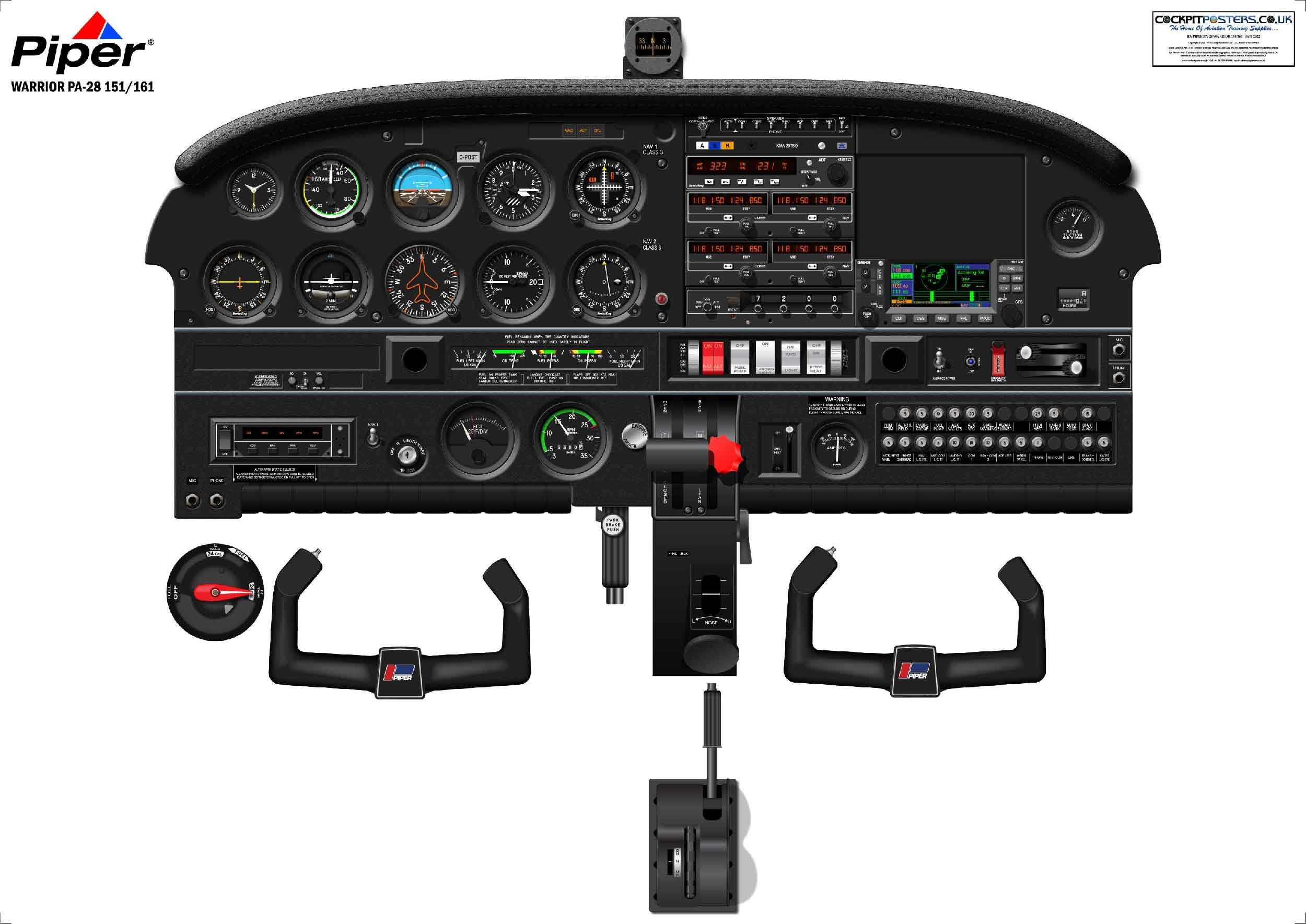
Piper Warrior PA-28
The Piper Warrior is used primarily for PPL and early CPL training. It is stable, forgiving, and fuel-efficient, making it ideal for building strong fundamentals. For students, this means fewer repeated lessons and better confidence development.
Piper Arrow PA-28R
The Piper Arrow introduces students to complex aircraft systems, including retractable landing gear and constant-speed propellers. This step-up aircraft develops systems management, checklist discipline, and professional workload handling.
Piper Seminole PA-44
The Piper Seminole is the backbone of multi-engine and instrument rating training. It is specifically designed for asymmetric flight and engine-failure training, making it highly relevant for airline preparation.
Beechcraft King Air C90
The King Air C90 provides exposure to turboprop operations, advanced avionics, and airline-style SOPs. This experience is extremely valuable for students targeting charter, corporate aviation, or advanced professional roles.
Private Pilot Licence (PPL)
The Private Pilot Licence (PPL) is the foundational stage of professional flight training at Australian National Airline College. This course is designed for students who are entering aviation for the first time and need to build strong, correct habits from the very beginning. At ANAC, the PPL is not treated as a casual recreational licence, but as the first step in a structured professional pilot pathway.
During the PPL phase, students learn the fundamentals of aircraft handling, navigation, meteorology, air law, and aviation decision-making. Training is conducted in real Australian airspace, including controlled environments around Moorabbin Airport, which exposes students early to professional radio communication and air traffic procedures. This experience is particularly valuable for international students, as it builds confidence and situational awareness from the start.
ANAC uses stable, training-optimised aircraft such as the Piper Warrior PA-28 during this phase. These aircraft are forgiving, predictable, and fuel-efficient, allowing students to focus on skill development rather than aircraft complexity. The result is faster learning progression and fewer repeat lessons, which directly reduces overall training cost.
Another important aspect of ANAC’s PPL training is instructor quality and standardisation. Lessons follow a clear syllabus, ensuring that each flight has a defined objective. Students are encouraged to understand why procedures are followed, not just how to perform them. This mindset becomes essential later in commercial and airline training.
For international students, the PPL stage also serves as a realistic self-assessment period. It helps determine whether aviation is a suitable long-term career before committing to higher financial investment. By the end of the PPL, students graduate with solid flying skills, professional discipline, and a clear understanding of what lies ahead in commercial pilot training.
Commercial Pilot Licence (CPL)
The Commercial Pilot Licence (CPL) is where flight training transitions from learning to flying professionally. At ANAC, this course is designed to produce pilots who are not only legally qualified, but operationally competent and career-ready.
CPL training focuses on precision, consistency, and decision-making under workload. Students are trained to fly accurately in varied weather conditions, manage fuel and alternates, and plan flights using professional aviation standards. Unlike schools that focus on minimum legal requirements, ANAC emphasises flying accuracy, judgement, and discipline—qualities airlines actively look for.
Training continues in busy controlled airspace, which means students develop confidence in complex radio communication and traffic management. This environment mirrors real airline operations far more closely than quiet regional airfields. For international students, this exposure significantly improves adaptability during future airline simulator assessments.
ANAC’s CPL syllabus is structured to minimise unnecessary flight hours. Each lesson has a clear purpose, reducing repetition and controlling total training cost. This efficiency is a major reason ANAC is considered one of the most cost-effective flying schools in Australia for international students.
The CPL course also builds a globally respected flight profile. Logbooks, theory credits, and operational experience gained at ANAC are well regarded internationally and easier to convert in many countries. This is particularly important for students planning to return home or apply for overseas airline positions.
By the end of the CPL, graduates are no longer student pilots—they are professional aviators with the discipline, confidence, and skill base required for advanced multi-engine and instrument training.
Indian Diploma of Aviation – Commercial Pilot Licence (DGCA Pathway)
ANAC offers a specialised Commercial Pilot Licence pathway aligned with Indian DGCA conversion requirements, making it a popular option for Indian students seeking high-quality international training with a clear route back to India.
This program follows CASA standards while maintaining compatibility with DGCA conversion logic. Students complete their flight training in Australia under strict regulatory oversight, benefiting from Australia’s superior training environment, controlled airspace exposure, and English-language aviation operations.
The advantage of this pathway lies in its structure. Rather than completing fragmented training and later struggling with conversion gaps, students follow a syllabus that anticipates DGCA expectations. This reduces retraining, additional examinations, and unnecessary flight hours after returning to India.
Training aircraft, instructional methods, and documentation are maintained at professional standards, ensuring logbooks and experience records are conversion-friendly. ANAC’s transparent approach helps students understand what will be required after graduation, reducing uncertainty and financial risk.
For Indian students, this pathway combines the safety, discipline, and international credibility of Australian training with a practical plan for licence conversion. It is particularly suitable for students aiming for airline careers in India while wanting exposure to world-class training standards.
Multi-Engine Command Instrument Rating (MEIR)
The Multi-Engine Command Instrument Rating (MEIR) is one of the most critical stages of professional pilot training. At ANAC, this course is designed to develop true airline-relevant skills, not just pass an exam.
Training is conducted primarily on the Piper Seminole PA-44, an aircraft specifically designed for multi-engine and asymmetric flight training. Students learn to manage engine failures, high workload situations, and instrument flight procedures under real operational conditions.
Instrument training at ANAC is not limited to simulators. Students fly real IFR procedures, including departures, en-route navigation, and precision and non-precision approaches. This builds confidence and situational awareness that cannot be replicated through simulator-only programs.
For international students, MEIR training is especially important because airline assessments heavily focus on instrument procedures, crew coordination, and workload management. ANAC’s emphasis on SOPs, checklist discipline, and decision-making prepares students effectively for these evaluations.
The course structure balances simulator and aircraft time efficiently, ensuring cost control without sacrificing training quality. By the end of the MEIR, students are capable of operating complex aircraft in challenging environments—an essential requirement for airline and charter careers.
Type Ratings (Beechcraft King Air C90, Citation, DC-3)
ANAC also offers advanced type rating courses for pilots seeking higher-performance aircraft experience. One of the most notable is the Beechcraft King Air C90 type rating, which provides exposure to turboprop operations and airline-style systems.
These courses are designed for pilots aiming for charter, corporate aviation, or advanced professional roles. Training focuses on SOP-based flying, advanced avionics, pressurisation systems, and high-performance engine management.
For international students, type ratings add significant value to a professional profile. Turboprop experience demonstrates maturity, technical competence, and readiness for complex operations. While not mandatory for airline entry, it often strengthens CVs and improves confidence during interviews and simulator checks.
ANAC’s approach ensures that type rating training is structured, purposeful, and relevant—not just logbook padding. This makes it a strategic option for pilots planning long-term professional growth.
Aviation Medical & International Student Preparedness
Before commencing commercial training, students must obtain a CASA Class 1 aviation medical. ANAC provides clear guidance on timing, requirements, and common issues. Early medical clarity helps students avoid late-stage disruptions that can be financially and emotionally costly.
Tuition Fees for International Pilot Students
Tuition fees are one of the most important considerations for international students planning pilot training in Australia. Unlike traditional academic degrees, flight training fees are influenced by aircraft usage, instructor time, fuel costs, and training efficiency. At Australian National Airline College (ANAC), tuition fees are structured to be transparent, realistic, and value-based, which is why the school is often considered one of the most cost-efficient options for international students.
Rather than advertising unrealistically low headline prices, ANAC designs its course fees around average completion hours, reducing the risk of unexpected cost blowouts later in training. Fees typically cover flight instruction, aircraft hire, and structured ground training, with clear breakdowns provided during enrolment. This transparency helps students and families plan finances accurately before arriving in Australia.
Because ANAC operates a large in-house aircraft fleet, training delays are minimised. Fewer cancellations and repeat lessons mean students often complete their licences within expected budgets. For international students, this efficiency can result in significant savings on accommodation, living expenses, and potential visa extensions.
While flight training in Australia is a serious financial investment, ANAC’s approach focuses on total cost to completion, not just hourly rates—making it a practical and financially safer choice for long-term professional pilot training.
Entry Requirements for International Students
Entry requirements for pilot training in Australia are designed to ensure that students are medically, academically, and linguistically prepared for the demands of aviation. At ANAC, these requirements are clear and aligned with Australian aviation and immigration standards.
Academically, students are generally expected to have completed secondary education with a basic foundation in mathematics and physics. While an advanced science background is not mandatory, the ability to understand technical concepts is important for flight theory and aircraft systems training.
From a medical perspective, students pursuing commercial pilot training must obtain a CASA Class 1 Aviation Medical Certificate. This assessment confirms that the applicant meets the physical and mental health standards required for professional flying. ANAC strongly encourages students to complete their medical early to avoid delays after enrolment.
English language proficiency is another key requirement. Since aviation operates entirely in English, students must demonstrate sufficient language skills to understand instructions, communicate with air traffic control, and operate safely in a professional environment.
Finally, students must meet Australian student visa criteria, including financial capacity and Genuine Temporary Entrant requirements. Together, these entry standards ensure that international students are fully prepared for safe, compliant, and successful pilot training in Australia.
Student Visa Process for International Pilot Students in Australia
For international students planning to pursue professional pilot training in Australia, understanding the student visa process is just as important as choosing the right flying school. Flight training is a long-term commitment, and visa clarity plays a major role in ensuring that training can be completed smoothly without unnecessary interruptions.
When enrolling at Australian National Airline College (ANAC), international students typically apply for an Australian Student Visa (Subclass 500). This visa allows students to live in Australia for the duration of their approved course and, subject to conditions, work limited hours while studying.
The process begins with receiving a Confirmation of Enrolment (CoE) from the flying school. ANAC provides structured course documentation, including course duration, training hours, and attendance expectations. These documents are critical, as Australian immigration authorities closely examine whether the course is genuine, full-time, and aligned with the applicant’s background and future career plans.
A key part of the visa application is demonstrating Genuine Temporary Entrant (GTE) intent. This means the student must clearly explain why they want to study aviation in Australia, why the chosen institution is appropriate, and how the qualification fits into their long-term career pathway. ANAC’s airline-focused structure and internationally recognised training standards help strengthen this narrative, especially for students aiming to work as pilots in their home countries or overseas.
Applicants must also show financial capacity, including tuition fees, living expenses, and travel costs. Because flight training can be expensive, transparent cost structures and realistic training timelines—such as those provided by ANAC—are important for visa credibility.
Other requirements include English language proficiency, Overseas Student Health Cover (OSHC), and meeting health and character standards. Timing is crucial; students are advised to apply well in advance to avoid delays that could affect training start dates.
Overall, while the student visa process for pilot training is detailed, a well-structured course, clear documentation, and a realistic career plan significantly improve approval prospects and long-term compliance.
Airline Career Readiness: Honest Expectations
ANAC does not guarantee airline jobs—and that honesty is important. Instead, it focuses on producing pilots who are airline-ready, meaning they understand SOP culture, professional decision-making, and multi-crew operations.
Graduates progress into airlines and charter operations based on competence, not promises.
Who Should Choose ANAC
ANAC is ideal for:
-
International students targeting professional pilot careers
-
Those seeking cost control without quality compromise
-
Students planning licence conversion overseas
-
Pilots who value structured, disciplined training
It may not be suitable for hobby flyers or those looking only for the cheapest advertised hourly rate.
Final Conclusion
So, is ANAC the best flying school in Australia for international students?
If your goal is professional, affordable, airline-relevant flight training in a major Australian city, ANAC is one of the strongest choices available. Its Melbourne location, transparent cost structure, modern aircraft fleet, and airline-focused philosophy combine to deliver long-term value—not just a licence.
For students who think beyond the short term and focus on career outcomes, ANAC represents a balanced, realistic, and globally respected training pathway.